Ipamorelin vs sermorelin vs tesamorelin
Ipamorelin is a ghrelin-receptor agonist that triggers a selective GH pulse. Sermorelin and tesamorelin are both GHRH analogues: sermorelin is the unmodified 1–29 fragment with a half-life of minutes and a clinical history; tesamorelin is stabilised and has Phase 3 data on visceral fat. Ipamorelin is often paired with a GHRH analogue because the receptors differ.
Receptor and duration
| Peptide | Receptor | Duration | Evidence |
|---|---|---|---|
| Ipamorelin | Ghrelin receptor (GHS-R1a) | Hours, pulsatile | Pharmacology and rodent studies |
| Sermorelin | GHRH receptor | Minutes, pulsatile | Registered diagnostic history; small cognition study |
| Tesamorelin | GHRH receptor (stabilised) | Hours, pulsatile | Two Phase 3 trials on visceral fat |
Evidence base
Tesamorelin has the strongest record: two Phase 3 trials reporting 15–18% visceral-fat reduction. Sermorelin was a registered diagnostic and paediatric product and has a small cognition-and-sleep study in older adults. Ipamorelin's data are pharmacology and rodent studies; a post-operative ileus trial was completed but not pursued.
Choosing
Visceral-fat or body-composition endpoints with trial precedent: tesamorelin. Pulsatile GHRH input as a reference: sermorelin. Selective ghrelin-receptor stimulation, alone or paired with a GHRH analogue: ipamorelin.
Frequently asked questions
Can they be combined?
GHRH analogues and ipamorelin are routinely paired in research designs because the receptors differ; two GHRH analogues together add nothing.
Which has side-effect data?
Tesamorelin and sermorelin from clinical use: injection-site reactions, flushing, headache, joint pain for tesamorelin. Ipamorelin from pharmacology studies only.
Kits
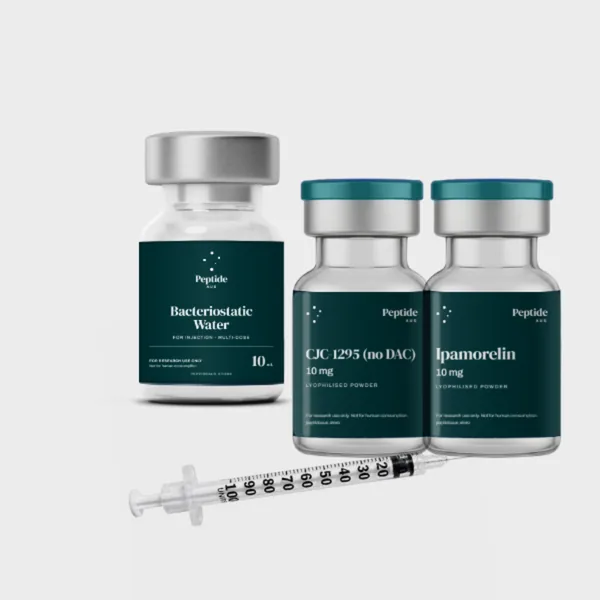
CJC-1295 (no DAC) + Ipamorelin Kit
CJC-1295 (no DAC) and Ipamorelin as separate vials, with water, forty syringes and swabs.
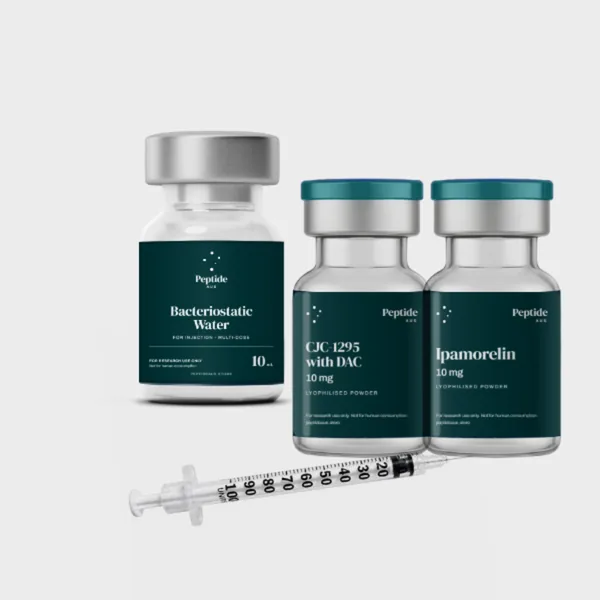
CJC-1295 DAC + Ipamorelin Kit
CJC-1295 with DAC and Ipamorelin, with water, twenty syringes and swabs.
Related products