Tissue Repair Pair (BPC-157 + TB-500)
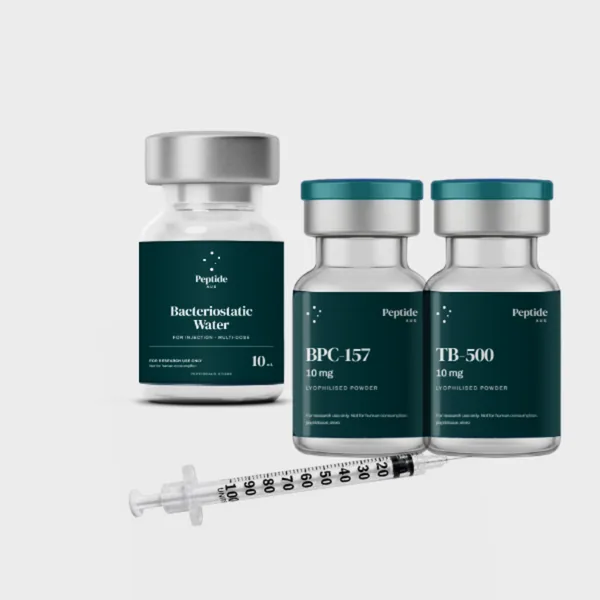
BPC-157 and TB-500 as separate 10mg vials with water, forty syringes and swabs.
$255.99


Research TB-500 vial, dispatched from Australian stock. In Stock
TB-500 is a short synthetic peptide reproducing the actin-binding region of thymosin beta-4, a 43-amino-acid protein present in almost every human cell. Thymosin beta-4 regulates actin polymerisation, which is the machinery cells use to move, and that is the property most of the repair research relies on.
By sequestering G-actin, the peptide changes the balance between free and polymerised actin, which promotes cell migration into wound sites. Downstream effects reported in the literature include endothelial migration and new vessel formation, keratinocyte migration in skin wounds, and reduced inflammatory cytokine release.
Thymosin beta-4 has been studied in dermal wound healing (Malinda et al., J Invest Dermatol 1999), corneal injury, and cardiac repair after infarction in mouse models (Bock-Marquette et al., Nature 2004). Clinical trials of full-length thymosin beta-4 in venous ulcers and dry eye have been completed; the synthetic fragment itself is studied preclinically.
Also known as: Thymosin beta-4 fragment, TB500, Tβ4 (17-23), tb500, tb 500, thymosin beta 4 fragment
Certificate of analysis. Every batch carries a certificate from an independent laboratory. Request the certificate for your batch with your order number and we send it.
For in-vitro research and laboratory use only. Not for human or veterinary use. By purchasing you confirm you are a qualified researcher and will use this compound in accordance with all applicable laws.
Synthetic fragment of thymosin beta-4 (residues 17–23 region). TB-500 is a short synthetic peptide reproducing the actin-binding region of thymosin beta-4, a 43-amino-acid protein present in almost every human cell. Thymosin beta-4 regulates actin polymerisation, which is the machinery cells use to move, and that is the property most of the repair research relies on.
Cell migration: actin sequestration and motility assays. Dermal wound closure: full-thickness wound models. Cardiac repair: post-infarction remodelling in rodents. Angiogenesis: endothelial tube formation. Inflammation: cytokine profiles in injury models. Thymosin beta-4 has been studied in dermal wound healing (Malinda et al., J Invest Dermatol 1999), corneal injury, and cardiac repair after infarction in mouse models (Bock-Marquette et al., Nature 2004). Clinical trials of full-length thymosin beta-4 in venous ulcers and dry eye have been completed; the synthetic fragment itself is studied preclinically.
Dermal wound models reported faster closure and better collagen organisation; mouse infarction models reported improved cardiac function after thymosin beta-4; corneal injury models reported faster epithelial repair. Human trials of full-length thymosin beta-4 in ulcers reported improved healing rates in some arms.
Full-length thymosin beta-4 was well tolerated in its clinical trials. The synthetic fragment has no human safety data; its actin-related mechanism raises theoretical questions about cell migration in tumour models that reviews note but no study has resolved. WADA prohibits it.
Published TB-500 studies specify their own amounts and routes, and those vary by model and endpoint. Peptide Aus products are supplied for in-vitro laboratory research, so we do not provide dosing, cycle or usage guidance for people. For laboratory preparation, the reconstitution calculator converts vial size and water volume into concentration and syringe units.
Complementary mechanisms; TB-500 drives cell migration and angiogenesis, BPC-157 growth-factor and nitric-oxide signalling.
Both are thymosin-derived but unrelated in function: alpha-1 is an immune modulator, beta-4 fragment a repair peptide.
They act through different systems. BPC-157's reported mechanisms run through nitric oxide and growth-factor signalling; TB-500 works on the actin cytoskeleton and cell migration. That is why the two are often studied together, and why we also offer them pre-blended.
Thymosin beta-4 and its fragments are prohibited by WADA under section S0.
Add about 2 mL of bacteriostatic water slowly down the inside of the vial and swirl gently; do not shake. 10mg in 2 mL gives 5 mg/mL. Refrigerate at 2–8 °C after reconstitution and use within 8–12 weeks. The calculator has this vial preset.
Lyophilised: −20 °C, sealed, away from light and moisture. Reconstituted: 2–8 °C, used within 8–12 weeks, never frozen.
TB-500 is not registered by the Therapeutic Goods Administration (TGA) as a medicine in Australia and is not approved for human or veterinary use. Peptide Aus supplies it as a research reagent for in-vitro laboratory work only. Supply of any substance for human use in Australia is governed by the Poisons Standard and the Therapeutic Goods Act, and the buyer is responsible for using the material lawfully. If you are looking for a treatment, speak to a doctor.
Directly from Peptide Aus, from Australian stock: TB-500 (10mg) is $129.99 AUD including GST. Paid orders before 2pm AEST/AEDT dispatch the same business day, tracked.
BPC-157 and TB-500 as separate 10mg vials with water, forty syringes and swabs.