
MOTS-C in Australia
MOTS-C is available in Australia as a research-grade lyophilised vial for laboratory use, in 3 sizes from $94.99 (10mg) to $159.99 (40mg), shipped from Peptide Aus stock. It is not approved for human use.

Vial sizes and prices
| Product | Price | Per mg | Stock |
|---|---|---|---|
| MOTS-C (10mg) | $94.99 | $9.50/mg | In Stock |
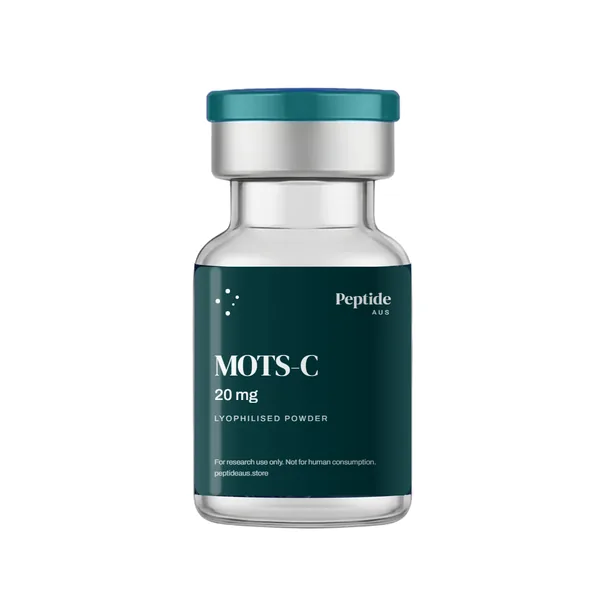
| MOTS-C (20mg) | $125.99 | $6.30/mg | In Stock |
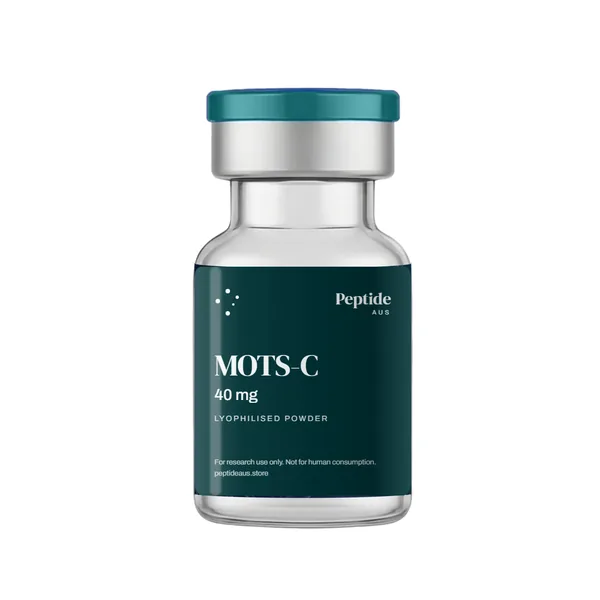
| MOTS-C (40mg) | $159.99 | $4.00/mg | In Stock |
What MOTS-C is
Mitochondrial-derived peptide encoded in the 12S rRNA gene
MOTS-c is a 16-amino-acid peptide encoded inside the mitochondrial genome rather than the nuclear genome, one of a small family of mitochondrial-derived peptides discovered in the 2010s. It acts as a signal from mitochondria to the rest of the cell and is studied for metabolic regulation and exercise physiology.
How it works
MOTS-c inhibits the folate cycle, which raises AICAR and activates AMPK, the central energy sensor. Under metabolic stress it moves into the nucleus and regulates genes for stress resistance. Circulating levels fall with age and rise with exercise.
What the research reports
Lee et al. (Cell Metab 2015) reported that MOTS-c prevented diet-induced obesity and insulin resistance in mice. Reynolds et al. (Nat Commun 2021) showed it improved physical performance in young, middle-aged and old mice. Human data are observational, showing exercise-induced increases.
Key research areas
- AMPK activation — Folate-cycle inhibition and energy sensing
- Insulin sensitivity — Glucose disposal in obese rodents
- Exercise physiology — Endurance and muscle adaptation
- Ageing research — Age-dependent decline in circulating levels
Also known as: MOTS-c, Mitochondrial ORF of the twelve S rRNA type-c, mot c, mots c, mot-c
Is MOTS-C legal in Australia?
MOTS-C is not registered by the Therapeutic Goods Administration (TGA) as a medicine in Australia and is not approved for human or veterinary use. Peptide Aus supplies it as a research reagent for in-vitro laboratory work only. Supply of any substance for human use in Australia is governed by the Poisons Standard and the Therapeutic Goods Act, and the buyer is responsible for using the material lawfully. If you are looking for a treatment, speak to a doctor.
Frequently asked questions
What is MOTS-C?
Mitochondrial-derived peptide encoded in the 12S rRNA gene. MOTS-c is a 16-amino-acid peptide encoded inside the mitochondrial genome rather than the nuclear genome, one of a small family of mitochondrial-derived peptides discovered in the 2010s. It acts as a signal from mitochondria to the rest of the cell and is studied for metabolic regulation and exercise physiology.
What is MOTS-C studied for?
AMPK activation: folate-cycle inhibition and energy sensing. Insulin sensitivity: glucose disposal in obese rodents. Exercise physiology: endurance and muscle adaptation. Ageing research: age-dependent decline in circulating levels. Lee et al. (Cell Metab 2015) reported that MOTS-c prevented diet-induced obesity and insulin resistance in mice. Reynolds et al. (Nat Commun 2021) showed it improved physical performance in young, middle-aged and old mice. Human data are observational, showing exercise-induced increases.
MOTS-C before and after: what do the studies show?
Mice on a high-fat diet given MOTS-c did not develop obesity or insulin resistance; aged mice improved physical performance; circulating MOTS-c rises after exercise in humans. No human intervention trial has reported.
What side effects has MOTS-C research reported?
No human safety data. Rodent studies reported no toxicity at the doses used.
What is the MOTS-C dosage?
Published MOTS-C studies specify their own amounts and routes, and those vary by model and endpoint. Peptide Aus products are supplied for in-vitro laboratory research, so we do not provide dosing, cycle or usage guidance for people. For laboratory preparation, the reconstitution calculator converts vial size and water volume into concentration and syringe units.
MOTS-C vs 5-Amino-1MQ: what is the difference?
Both are studied for metabolic flexibility; MOTS-c through AMPK, 5-Amino-1MQ through NNMT.
MOTS-C vs SS-31: what is the difference?
SS-31 protects mitochondrial membranes; MOTS-c is a mitochondrial signal to the nucleus.
MOTS-C vs humanin: what is the difference?
Humanin is another mitochondrial-derived peptide, studied for cell survival rather than metabolism.
10mg, 20mg or 40mg?
The 10mg vial covers assay development; 20mg and 40mg reduce cost per milligram for extended rodent or cell protocols.
How do you reconstitute MOTS-C?
With bacteriostatic water added slowly down the inside wall of the vial, then swirled gently. Each vial size lists its suggested volume, and the calculator converts volume to concentration.
How should MOTS-C be stored?
Lyophilised: −20 °C, sealed, away from light and moisture. Reconstituted: 2–8 °C, used within 8–12 weeks, never frozen.
Is MOTS-C legal in Australia?
MOTS-C is not registered by the Therapeutic Goods Administration (TGA) as a medicine in Australia and is not approved for human or veterinary use. Peptide Aus supplies it as a research reagent for in-vitro laboratory work only. Supply of any substance for human use in Australia is governed by the Poisons Standard and the Therapeutic Goods Act, and the buyer is responsible for using the material lawfully. If you are looking for a treatment, speak to a doctor.
Where can I buy MOTS-C in Australia, and what does it cost?
Directly from Peptide Aus, from Australian stock, in 3 vial sizes from $94.99 (10mg) to $159.99 (40mg). Prices are AUD and GST inclusive. Paid orders before 2pm AEST/AEDT dispatch the same business day, tracked.
Kits with this compound
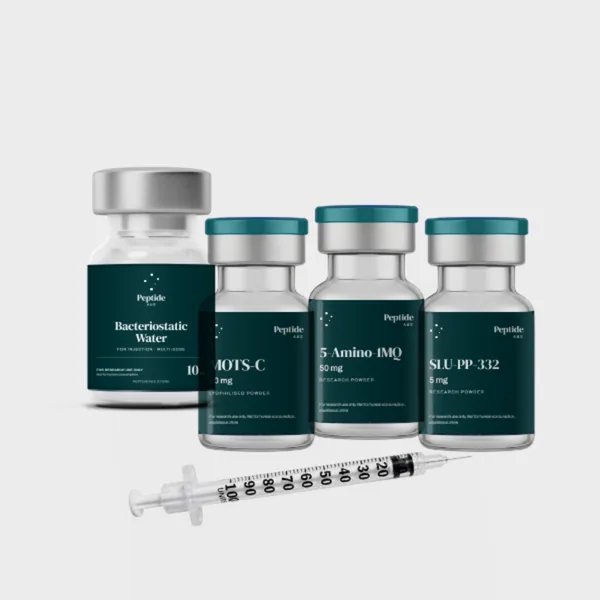
Metabolic Trio
MOTS-c, 5-Amino-1MQ and SLU-PP-332 with water, forty syringes and swabs: the three metabolic research tools people compare.
All MOTS-C products are supplied for in-vitro research and laboratory use only. Not for human or veterinary use.