
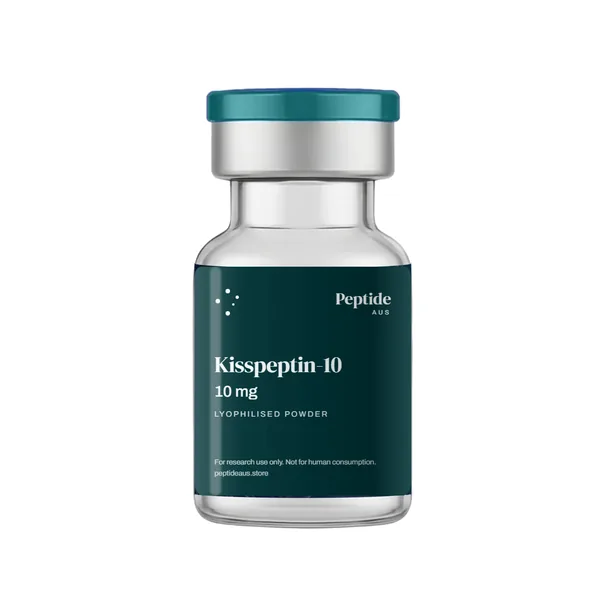
Reproductive research peptides in Australia
Kisspeptin-10 sits at the top of the reproductive hormone cascade, triggering GnRH and therefore LH and FSH, and is the reference tool for reproductive-axis research. Oxytocin's obstetric role is long established and its current research interest is central: social recognition, bonding and anxiety. Both are supplied as 10mg research vials.
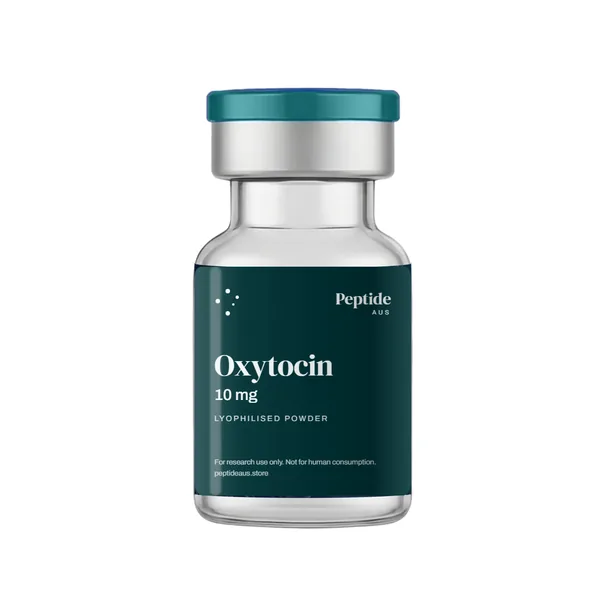
Compounds in this category
Kisspeptin-10
Ten-residue C-terminal fragment of kisspeptin, the KISS1R ligand
Kisspeptin-10 is the shortest fully active fragment of kisspeptin, the hypothalamic peptide that sits at the top of the reproductive hormone cascade. It triggers GnRH release, which drives LH and FSH, and its discovery in 2003 explained a form of inherited infertility. Human studies reported dose-dependent LH rises within an hour and testosterone increases in men; as an IVF trigger it produced oocyte maturation with a lower hyperstimulation risk than hCG.
Oxytocin
Nonapeptide hormone and neuromodulator
Oxytocin is a nine-amino-acid hormone made in the hypothalamus and released from the posterior pituitary. Its peripheral roles in labour and lactation are well established; the research interest today is in its central effects on social recognition, trust, bonding and anxiety, where it acts as a neuromodulator. Intranasal oxytocin studies reported changes in trust, social recognition and anxiety measures with inconsistent replication; obstetric use is long established.
Reproductive Research at a glance
| Compound | Class | Formats | From | Studied for |
|---|---|---|---|---|
| Kisspeptin-10 | Ten-residue C-terminal fragment of kisspeptin, the KISS1R ligand | 10mg | $114.99 | GnRH pulse generation, LH and testosterone response |
| Oxytocin | Nonapeptide hormone and neuromodulator | 10mg | $131.99 | Social behaviour, Anxiety research |
Kisspeptin-10
The shortest fully active fragment of kisspeptin, it binds KISS1R on GnRH neurons and produces an LH rise within an hour in human studies, with testosterone increases in men. It has been trialled as an IVF trigger with a lower ovarian-hyperstimulation risk than hCG, and in hypothalamic amenorrhoea. Because it acts upstream of GnRH it keeps pituitary feedback intact, which direct GnRH analogues bypass.
Oxytocin
A nonapeptide hormone made in the hypothalamus, oxytocin acts on uterine and mammary receptors peripherally and on the amygdala, hippocampus and nucleus accumbens centrally. Intranasal oxytocin has been trialled in autism, social anxiety and schizophrenia with variable results; rodent studies map pair-bonding circuits. It remains a standard tool in social-neuroscience research.
Legal status in Australia
Oxytocin is a Schedule 4 prescription medicine when supplied as the registered obstetric injection; the research vial is not that product. Kisspeptin is investigational. Both are supplied for in-vitro laboratory research only.
Frequently asked questions
What does kisspeptin do?
It triggers GnRH release, which drives LH and FSH; it is the upstream signal of the reproductive axis.
Is the oxytocin vial the same as Syntocinon?
Same peptide; Syntocinon is a registered sterile injection for obstetric use, the vial is research powder.
Are these legal in Australia?
Research supply for laboratory use is lawful; neither vial is approved for human use.
Research use only: every product in this category is intended for in-vitro laboratory research. Not for human or veterinary use.