Reproductive Research
Oxytocin (10mg)
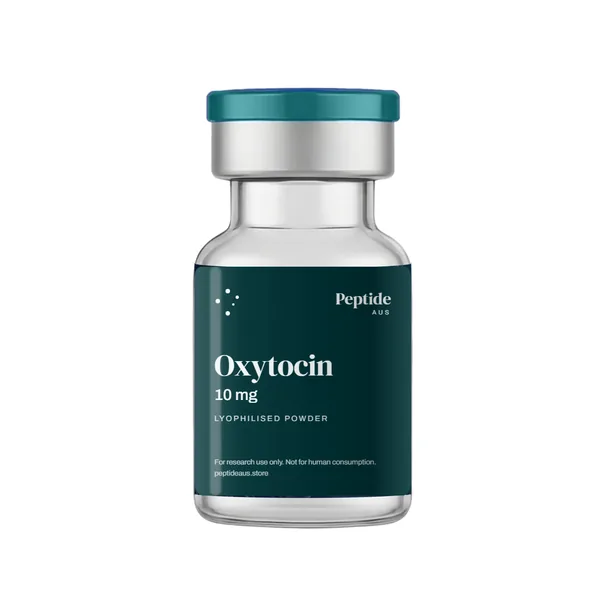
Research Oxytocin vial, dispatched from Australian stock. In Stock
$131.99AUD, GST inclusive · $13.20 per mg
CoA on request10mg per vialLyophilised powderSame business day dispatch*
Nonapeptide hormone and neuromodulator
Oxytocin is a nine-amino-acid hormone made in the hypothalamus and released from the posterior pituitary. Its peripheral roles in labour and lactation are well established; the research interest today is in its central effects on social recognition, trust, bonding and anxiety, where it acts as a neuromodulator.
How it works
Oxytocin receptors are expressed in the uterus and mammary gland and throughout the amygdala, hippocampus and nucleus accumbens. Central release modulates social salience and fear circuits; peripheral and central pools are regulated separately.
What the research reports
Intranasal oxytocin has been tested in autism, social anxiety and schizophrenia with variable results and questions about brain penetration. Rodent studies map pair-bonding and maternal behaviour circuits. It remains a standard tool in social-neuroscience research.
Key research areas
- Social behaviour — Bonding and recognition circuits
- Anxiety research — Amygdala fear-response modulation
- Reproductive physiology — Uterine and mammary receptor pharmacology
- Autism research — Intranasal trial history
Also known as: OXT, Pitocin / Syntocinon (brands), oxt, Syntocinon (brand), Pitocin (brand)
Certificate of analysis. Every batch carries a certificate from an independent laboratory. Request the certificate for your batch with your order number and we send it.
Specifications
- Compound
- Oxytocin
- CAS number
- 50-56-6
- Category
- Reproductive Research
- Vial size
- 10mg
- Certificate of analysis
- Available on request
- Form
- Lyophilised powder
- Suggested reconstitution
- 2 mL bacteriostatic water
- Storage (lyophilised)
- −20 °C, protect from light and moisture
- Storage (reconstituted)
- 2–8 °C, use within 8–12 weeks
- SKU
- PEP-042-10MG
Reconstitution calculator for this vial
Full calculator →For in-vitro research and laboratory use only. Not for human or veterinary use. By purchasing you confirm you are a qualified researcher and will use this compound in accordance with all applicable laws.
Frequently asked questions
What is Oxytocin?
Nonapeptide hormone and neuromodulator. Oxytocin is a nine-amino-acid hormone made in the hypothalamus and released from the posterior pituitary. Its peripheral roles in labour and lactation are well established; the research interest today is in its central effects on social recognition, trust, bonding and anxiety, where it acts as a neuromodulator.
What is Oxytocin studied for?
Social behaviour: bonding and recognition circuits. Anxiety research: amygdala fear-response modulation. Reproductive physiology: uterine and mammary receptor pharmacology. Autism research: intranasal trial history. Intranasal oxytocin has been tested in autism, social anxiety and schizophrenia with variable results and questions about brain penetration. Rodent studies map pair-bonding and maternal behaviour circuits. It remains a standard tool in social-neuroscience research.
Oxytocin before and after: what do the studies show?
Intranasal oxytocin studies reported changes in trust, social recognition and anxiety measures with inconsistent replication; obstetric use is long established.
What side effects has Oxytocin research reported?
Registered obstetric use carries a defined safety profile; intranasal research reported headache and nasal irritation. Cardiovascular effects with rapid intravenous dosing are documented in that setting.
What is the Oxytocin dosage?
Published Oxytocin studies specify their own amounts and routes, and those vary by model and endpoint. Peptide Aus products are supplied for in-vitro laboratory research, so we do not provide dosing, cycle or usage guidance for people. For laboratory preparation, the reconstitution calculator converts vial size and water volume into concentration and syringe units.
Oxytocin vs vasopressin: what is the difference?
Structurally similar nonapeptides with different receptor profiles; vasopressin acts on blood pressure and water balance.
How do you reconstitute Oxytocin (10mg)?
Add about 2 mL of bacteriostatic water slowly down the inside of the vial and swirl gently; do not shake. 10mg in 2 mL gives 5 mg/mL. Refrigerate at 2–8 °C after reconstitution and use within 8–12 weeks. The calculator has this vial preset.
How should Oxytocin be stored?
Lyophilised: −20 °C, sealed, away from light and moisture. Reconstituted: 2–8 °C, used within 8–12 weeks, never frozen.
Is Oxytocin legal in Australia?
Oxytocin is a Schedule 4 prescription-only medicine in Australia when supplied as the registered injection for obstetric use. Research-grade oxytocin powder is not that product and is not approved for human use. Peptide Aus supplies it for in-vitro laboratory research only.
Where can I buy Oxytocin in Australia, and what does it cost?
Directly from Peptide Aus, from Australian stock: Oxytocin (10mg) is $131.99 AUD including GST. Paid orders before 2pm AEST/AEDT dispatch the same business day, tracked.
Frequently bought together